Dumbbell Muscle Growth Science: Calm Joints, Consistent Gains
By Lila Menon • 1st Dec
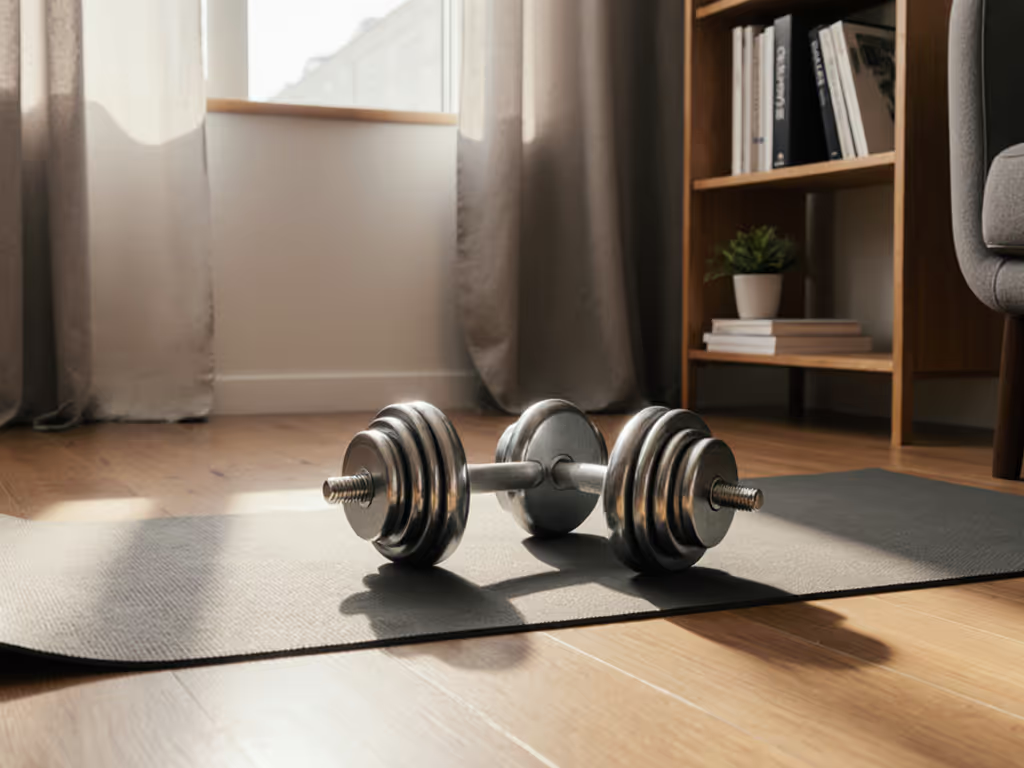
When your downstairs neighbor knocks at 6 AM because plates rattled through the floor, muscle growth science feels irrelevant. But understanding dumbbell muscle growth science and hypertrophy mechanisms becomes essential when your shoulder flares during lateral raises or your grip fails before your muscles fatigue. For home lifters in tight spaces, growth isn't just about weight on the bar (it's about gear that respects your joints, nervous system, and shared living spaces). Let's examine how quiet training setups actually serve your long-term gains.
Why does grip comfort matter for hypertrophy?
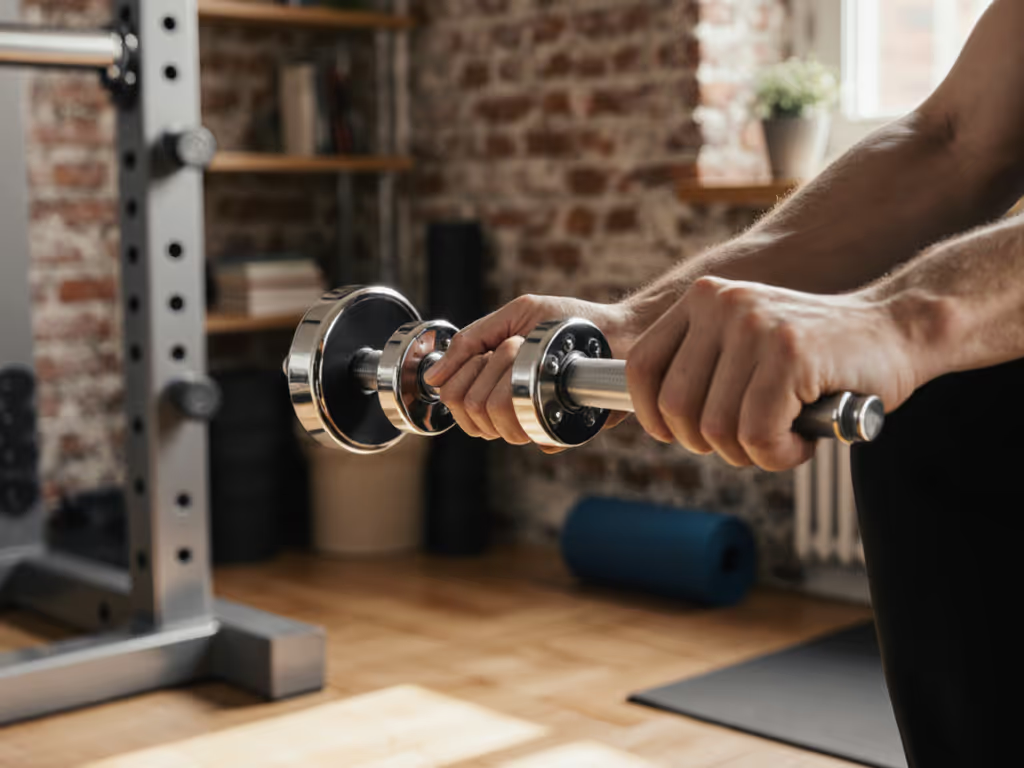
Many lifters blame themselves when shoulders pinch during overhead presses, not realizing equipment design sabotages their form. That time my elbow flared relentlessly during dumbbell lateral raises? I filmed my wrists and discovered handle vibration sent my grip into constant micro-adjustments (24 hours of correction that left my nervous system braced). When I switched to a slightly thicker, precisely knurled handle, the tension vanished. For design specifics, compare wrist-safe handle ergonomics across popular adjustable dumbbells. My lift volume doubled overnight not because I got stronger, but because my body could finally focus on growth signals instead of damage control.
Research shows muscle fiber recruitment requires stable joint positioning. When your wrist fights uncomfortable handles, neurological resources divert from contraction quality to stabilization, robbing you of the precise tension needed for hypertrophy. A study comparing free weights to machine training found that stability demands increase muscle activation in synergists, but this isn't always beneficial. For quiet home training, controlled stability (not excessive wobble) creates the ideal tension-to-noise ratio.
How do hypertrophy mechanisms work when you can't drop weights?
The three established hypertrophy mechanisms (mechanical tension, metabolic stress, and muscle damage) don't require noisy failures. In fact, consistent tension trumps occasional maximal efforts for sustainable growth. Consider this evidence-tinted reality: a Frontiers in Physiology study found that dumbbell and cable lateral raises produced nearly identical 3.3%-4.6% lateral deltoid growth despite different resistance profiles. The common thread? Standardized range of motion and controlled execution (not how loudly the plates hit the floor).
Your progressive overload physiology thrives on predictable, repeatable sessions. Learn to structure progressive overload with adjustable dumbbells for steady gains. When you train with gear that rattles, your body secretes cortisol before the first rep, a catabolic response that counteracts growth. But equipment that supports a neutral wrist, quiet nervous system lets you accumulate effective volume. This is why fast-adjust dumbbells with secure lock mechanisms (like the REP Fitness Quickdraw system with its steel switches) matter: they eliminate the friction that derails your workout rhythm. If you're curious, here's how fast weight changes work inside different adjustable systems.
What does "time under tension" really mean for apartment dwellers?
Time under tension gets oversimplified as "slow reps," but optimal tension requires controlled movement specific to each joint. For elbow-dominant lifts like curls, studies suggest 30-45 seconds of tension per set maximizes growth. But how do you achieve this without noisy plates shifting?
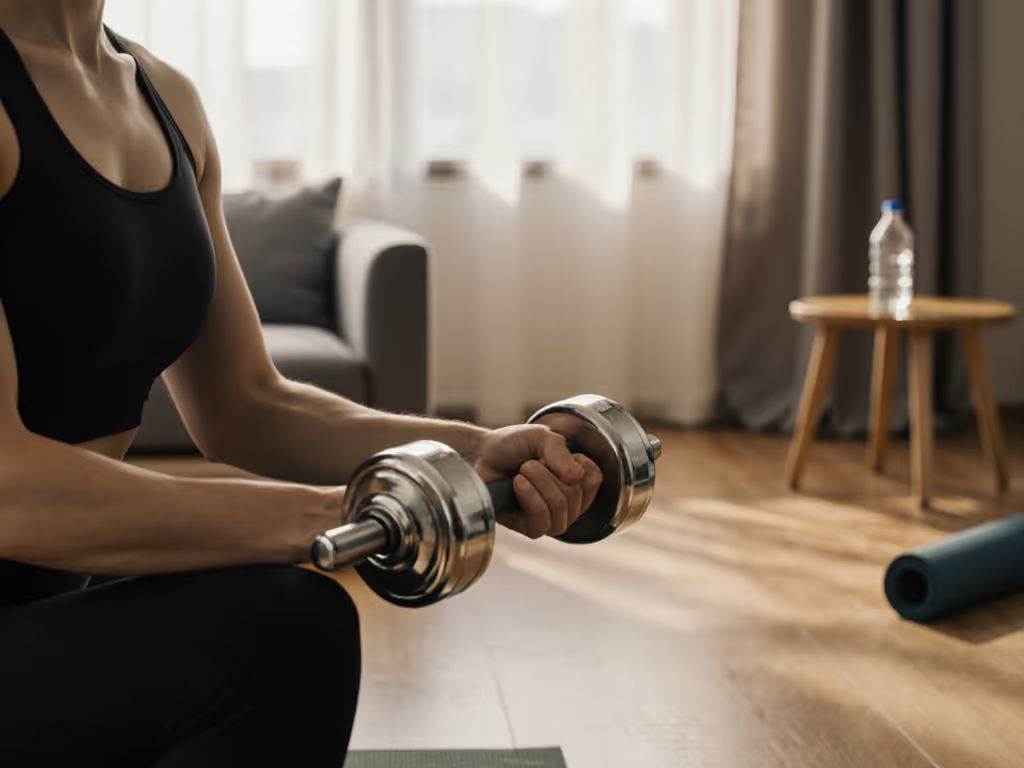
Consider this body-aware cue: during your next bicep curl, pause when the dumbbell handle sits flush against your forearm. If you feel vibration traveling up your arm, that's wasted energy (not productive tension). Quiet handles with minimal play let you feel subtle contraction shifts critical for growth. My light-sleeping niece taught me that true time under tension happens when you can hear your own breathing during the eccentric phase, no rattle drowning out your body's feedback.
How can I build muscle without disturbing others?
The myth that heavy lifting requires aggression collapses under scrutiny. A meta-analysis in PMC confirmed that free weights produce similar strength gains as machines when ROM is matched, proving control beats chaos. For home lifters, this means:
- Focus on the concentric phase: Lift with purposeful control (2 seconds) rather than explosive momentum
- Lengthen the eccentric: Lower weights smoothly (3-4 seconds) to maximize tension without noise
- Prioritize joint alignment: A slightly thicker handle (32mm like those on the REP Quickdraw system) reduces grip correction
- Measure your space: Place rubber mats under stands to absorb vibration (not just impact)
Remember Verbatim allusion: "Comfort that keeps you consistent is performance in disguise." For quiet-living considerations, check our apartment-safe noise comparison.
What role does metabolic stress play in quiet training?
Metabolic stress (that satisfying "burn" sensation) often gets conflated with noisy training. But this growth mechanism depends on blood flow occlusion and metabolite buildup, not how loudly you drop weights. You can achieve this through gentle techniques:
- Tempo variations: 3-1-2-0 tempos (3 seconds down, 1 pause, 2 up, 0 rest) create cumulative stress
- Blood flow restriction: Lighter weights with bands (kept silent with fabric sleeves)
- Density training: More sets with shorter rest (but never at the cost of form)
Evidence shows metabolic stress triggers cellular swelling that stimulates growth pathways. And crucially, this process works best when your nervous system isn't fighting equipment vibration (not when you're holding your breath to keep neighbors happy).
Comfort that keeps you consistent is performance in disguise.
Why does gear quality directly impact growth?
Your equipment isn't neutral, it's either supporting or sabotaging your biology. When joints flare from poor handle geometry, your body deprioritizes hypertrophy to protect damaged tissue. The moment your grip fights rattling plates, your neurological resources split focus, leaving less available for the precise motor control needed to stimulate growth.
A gentle but precise truth: joints don't lie. If your wrist aches during dumbbell presses, it's not "just form", it's equipment failing your biomechanics. To see why balance matters, read our breakdown of weight distribution biomechanics and its impact on joint comfort. Seek gear with:
- Predictable handle diameters (30-34mm for most adults)
- Well-cut knurling that grips without tearing skin
- Minimal mechanical play (no rattle during transitions)
- Balanced weight distribution (centered mass feels lighter)
These features aren't luxuries, they're non-negotiables for sustainable growth. When your nervous system stays quiet through a 10-rep set, your muscles receive clean signals to adapt. And that's when true dumbbell muscle growth science begins working for you.
Final Thought: Your Quiet Gains Are Still Gains
The most profound growth happens in those unnoticed repetitions (the ones performed with perfect control while your partner sleeps nearby). When your equipment respects your joints, you stop fighting pain and start building strength. That's where the real magic of hypertrophy mechanisms unfolds: not in the noisy climax of your workout, but in the hundreds of consistent repetitions your body can actually recover from.
Further Exploration:
- Measure your current dumbbell handle diameter, does it allow a neutral wrist position throughout your full range of motion?
- Record one set of lateral raises with your phone, how much energy goes into stabilizing vs. contracting?
- Try slowing your eccentric phase by 1 second this week, notice changes in muscle engagement without increasing weight
When your training space supports, rather than stresses, your system, you'll discover that quiet consistency isn't settling, it's the most sophisticated growth strategy of all.